THAWRA
The Dig's mini-series on Arab radicalism in the 20th century.
Episode 6
Cold War Heats Up
Laying out the intensification of the Cold War across the Middle East–specifically Nasser’s mass political campaign against the Baghdad pact, the nationalization of the Suez Canal, and the military and political responses it provoked.
0:00
0:00
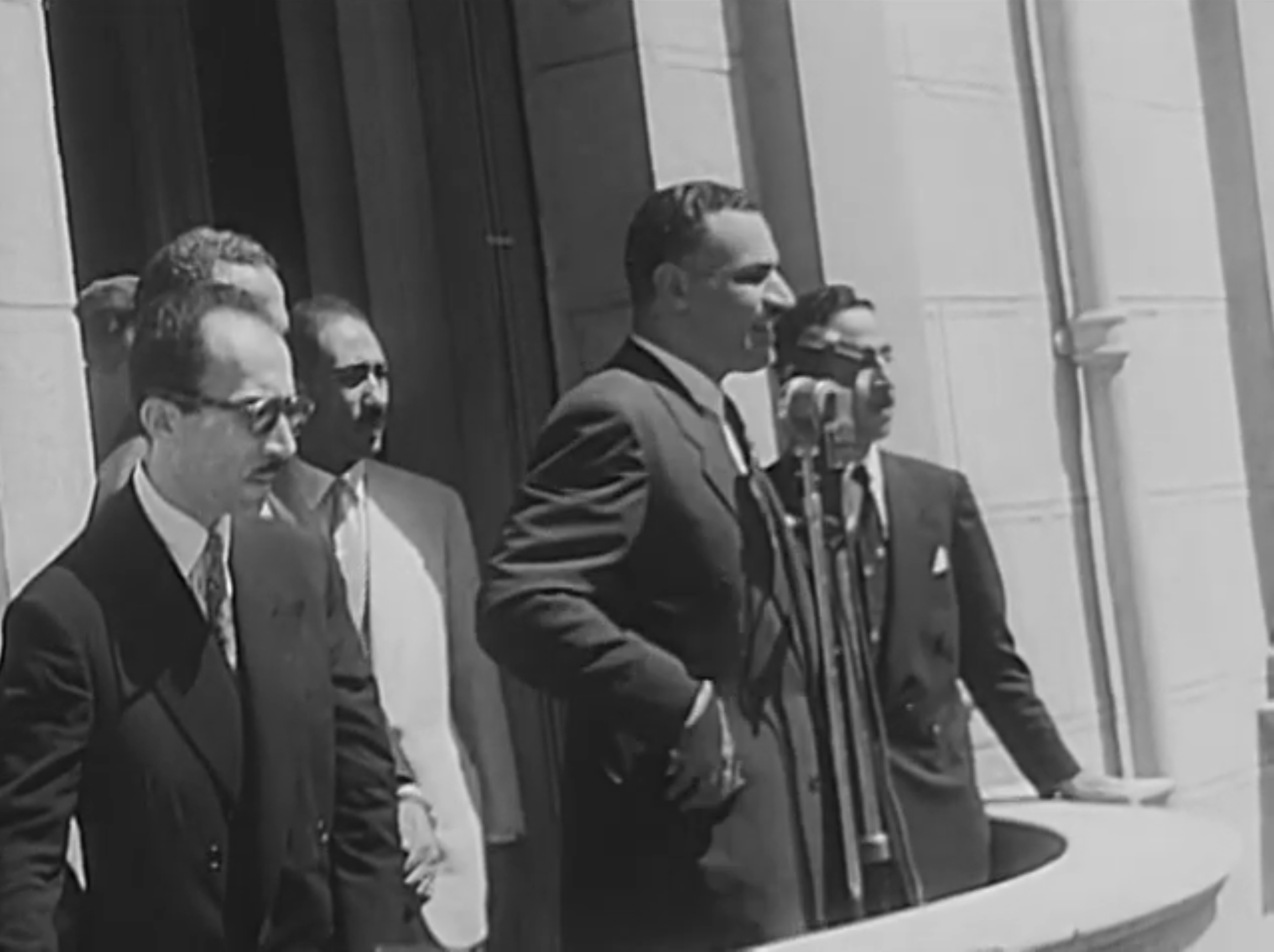
- Scholars have increasingly discussed the Cold War not only as a globe-bestriding conflict between two ideologically opposed superpowers–the United States and the USSR–but also a struggle over the pace, content and form of the decolonization moment that was roaring across the globe at the same time. In what ways did the ‘Cold War’ play out in the Middle East and what was its impact, shape, and intentions over the pace and shape of the anti-colonial moment?
- What was the Baghdad pact? What future for the region did it propose? How did it differ, and how does it relate, to the prior operation of colonial power? What forces were coalescing in opposition to it?
- How was Nasser’s politics not just national but regional? And how was that regional message conveyed? What were the mechanisms that allowed it to travel?
- Nasser lost the Suez campaign militarily but won politically. How? What does that suggest about politics?
- How do these political developments in the Mashriq compare and contrast to the situation of French colonies in North Africa, or Indochina, or the stirrings of African independences in Sub-Saharan Africa?
Nationalist Voices in Jordan: The Street and the State
Betty S. Anderson
2005
Book (Recommended)
Foreign Policy as Nation Making Turkey and Egypt in the Cold War
Reem Abou-El-Fadl
2018
Book (Recommended)
"Arab Socialism," in The Cambridge History of Socialism, ed. Marcel van der Linden
Abdel Razzaq Takriti and Hicham Safieddine
2022
Book Chapter (Recommended)
The March 1955 Outburst in the Gaza Strip: Thwarting Resettlement Schemes
Maher Charif
2002
Article (Recommended)
The Nine Day War
BBC
1966
Documentary (Supplementary)
Soundtrack to a Coup D’Etat
Johan Grimonprez
2024
Documentary (Supplementary)
Beyond the Din of the Battle: Stories from the Struggle for Port Said
Alia Mossallam
2016
Article (Supplementary)
"Building Egypt's Afro-Asian Hub" in The Lives of Cold War Afro-Asianism
Reem Abou-El-Fadl
2022
Book Chapter (Supplementary)
Making a World after Empire: The Bandung Moment and Its Political Afterlives
Christopher J. Lee
2010
Book (Supplementary)