THAWRA
The Dig's mini-series on Arab radicalism in the 20th century.
Episode 7
United Arab Republic Against Eisenhower
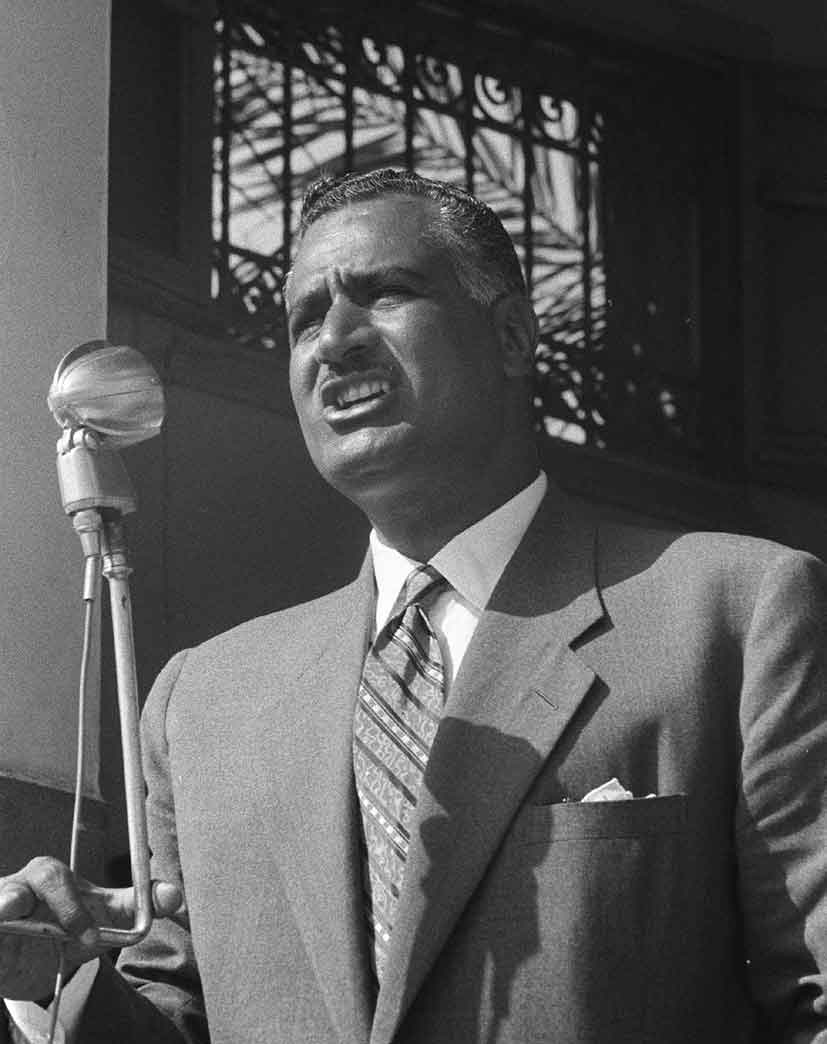
We begin with the US’s Eisenhower Doctrine, which in 1957 inaugurated a new era of imperialism in the Middle East, including the deployment of American combat operations in the region; and end with a local political response: the Ba’ath Party driving Syria and Egypt into the United Arab Republic, a superstate under Nasser’s rule, in 1958.
0:00
0:00
- What was the Eisenhower Doctrine and how did it differ from the foreign policy prescriptions and impositions that preceded it? Where was this doctrine first developed and refined?
- United Arab Republic: in what ways did it realize the old dream of pan-arab unity and what were the contradictions that resided within it?
- Why did the Ba’ath Party want to see the UAR come together? What did they imagine might happen? Did that political wager pay off?
- How did the prior Communist-Ba’ath alliance come together and how did it fall apart?
- Abed spends some time describing the sectarian organization of the post-independence Lebanese state. What was it, and how was it complicated by the huge influx of Palestinian refugees into the country? And how do inflamed sectarian tensions and anti-Palestinian sentiment produce a political crisis in 1958 that results in American marines landing on Lebanese shores?
Notes From the Minefield: United States Intervention in Lebanon and the Middle East, 1945-1958
Irene Gendzier
1997
Book (Recommended)
"Survival in an Age of Revolution": Charles Malik, Philo-Colonialism, and Global Counterrevolution in the American Historical Review
Nathaniel George
2025
Journal Article (Recommended)
From Arab Nationalism to OPEC: Eisenhower, King Sa‘ud, and the Making of U.S.-Saudi Relations
Nathan J. Citino
2002
Book (Recommended)
Containing Arab Nationalism: The Eisenhower Doctrine and the Middle East
Salim Yaqub
2004
Book (Recommended)
Declaration of Unity, Presidential Palace (Nasser signs agreement on UAR)
Nasser Digital Archive
1958
Archival footage (Supplementary)
Nasser announces the establishment of the United Arab Republic
Gamal Abdel Nasser
1958
Speech (Supplementary)
Baghdad Pact
Governments of UK and Iraq
1955
Treaty (Supplementary)
The Eisenhower Doctrine
Dwight D. Eisenhower
1957
Speech (Supplementary)
The Greater Middle East and the Cold War: US foreign policy under Eisenhower and Kennedy
Roby C. Barrett
2007
Book (Supplementary)
The Cold War and the Middle East
Yezid Sayigh and Avi Shlaim
1997
Book (Supplementary)
"1958 Reconsidered: State Formation and the Cold War in the Early Postcolonial Arab Middle East" in the International Journal of Middle East Studies
Cyrus Schayegh
2013
Journal Article (Supplementary)